Cross-in-Hand
Tess of the d'UrbervillesCross-in-Hand is a desolate upland site defined by a rough stone pillar carved with a human hand and burdened with conflicting accounts of its origin. Its meaning never settles into a single history: it may be a religious relic, a boundary marker, or a monument to violence. That uncertainty makes the place more than a point on a road. It becomes the setting for an oath imposed on Tess Durbeyfield and, later, a landmark on Angel Clare's search for her, joining landscape to the unequal power and unresolved past that shape their lives.
Setting and Appearance
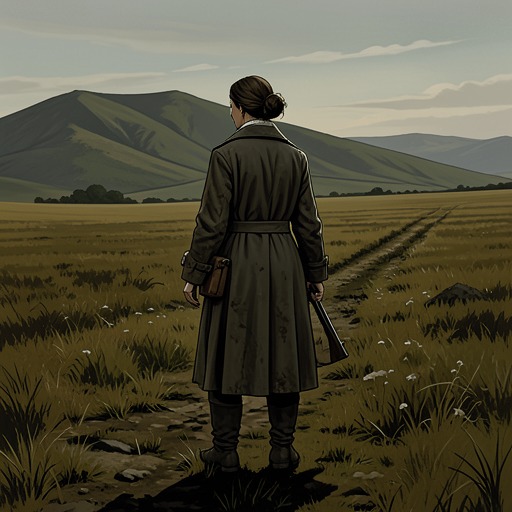
The site lies on a bleak, elevated stretch of country. As Tess crosses it on her journey toward Emminster, the narrator calls it the most forlorn spot on the pale upland, distinguished by a kind of severe, negative beauty rather than the picturesque charm sought by artists and visitors. The pillar is a rough monolith made of stone from a stratum unknown in any local quarry; a human hand is carved into its surface.
The landscape's starkness helps make the pillar seem both conspicuous and inscrutable. Its origins are disputed: one account holds that a devotional cross once completed the structure, leaving the present stone as a stump; another says the pillar is intact and was set up to mark a boundary or meeting place. The story does not resolve these explanations. Instead, it presents the monument as capable of appearing solemn or sinister, depending on the observer's mood, while retaining an effect that can unsettle even a phlegmatic passer-by.
A Landmark with Conflicting Histories
The site's name and the carved hand invite interpretation, but do not guarantee it. When Tess later asks a shepherd whether the stone was ever a Holy Cross, he rejects that account and gives a darker local tradition: the monument marks the place where a malefactor was tortured and hanged, with his bones said to lie beneath it. The tale adds that the man sold his soul to the devil and still walks there at times. This is reported as local belief, not established history; its force lies in how it intensifies the uncertainty already attached to the stone.
The competing accounts turn Cross-in-Hand into a sign whose meaning changes with the speaker. Alec d'Urberville presents it as a former Holy Cross, while the shepherd describes it as a memorial to punishment and a pact with the devil. Neither explanation provides a stable authority. Their contrast gives the site its particular atmosphere and connects its ambiguous religious associations to the novel's wider concern with moral judgment and the consequences assigned to the past.
Tess and the Oath
When Alec and Tess reach Cross-in-Hand together, Alec says that he must leave her and asks her to approach the pillar. He describes it as once having been a Holy Cross, although he says relics do not belong to his creed. He then asks Tess to place her hand on the carved hand and swear that she will never again tempt him through her charms or conduct. Tess objects that such a promise is unnecessary, but he insists that she swear it.
The moment reverses the apparent devotional purpose of the landmark. Rather than offering Tess protection or comfort, the supposed relic becomes the instrument of Alec's demand. The oath casts responsibility onto her and frames his own future conduct as something she must guard against. Tess's resistance is clear in her protest, yet Alec dictates the terms of the encounter. The scene therefore makes the pillar's conflicting history more than local color: its religious associations lend weight to a coercive demand, while its carved hand gives the oath a physical focal point.
Return and Narrative Significance
Later, Angel retraces part of Tess's route while looking for her. He passes the site and remembers that Alec had compelled Tess there, during his period of religious reform, to swear that she would never wilfully tempt him again. The same place that held Tess in an unequal encounter thus enters Angel's journey as evidence of a past he did not witness but must come to understand. Its recurrence links separate journeys across the upland and brings the consequences of Alec's demand into Angel's search.
Cross-in-Hand's significance rests on this layering of stories rather than on a settled explanation of its origins. Its religious, punitive, and legendary associations remain in tension; so does the contrast between a place associated with a cross and the pressure exerted there through an oath. By returning to the landmark through Tess's encounter, the shepherd's tale, and Angel's recollection, the narrative makes it a compact image of uncertain authority and persistent memory. The stone does not explain the past, but the characters' conflicting uses of it show how that past continues to shape their choices.